


From Idea to Collection A NYC Apparel Production Guide
New York Fashion Week puts design in the spotlight. The runway shows the concept, the styling, the mood, and the point of view. Behind every finished collection, though, there is another layer of work that rarely gets the same attention: production.
A strong idea only becomes a strong garment when the blank, artwork, print method, sizing, placement, color, finishing, and delivery all work together. That is where many emerging brands either gain confidence or lose time.
BKNY Printing works with designers, artists, musicians, agencies, and independent labels that need more than a basic T-shirt order. A collection may start with one sketch, one logo, one album cover, or one event concept. The job is to turn that idea into apparel that feels intentional, sells well, and represents the brand properly.
This guide explains how that process works, from the first sample to a finished short-run collection.

Production decisions shape the collection
Creative direction matters, but apparel production gives the idea its physical form. A design that looks strong on a screen can feel cheap if it is printed on the wrong garment. A hoodie can lose its value if the artwork placement is off by an inch. A merch drop can miss its window if the files are not ready when production begins.
For emerging designers and independent brands, the best production partner helps answer practical questions early:
What garment fits the look, price point, and customer?
Should the design be screen printed, digitally printed, embroidered, or finished another way?
How will the artwork behave on cotton, fleece, nylon, canvas, or blends?
What needs to be sampled before the full run?
How should the collection be labeled, packed, and prepared for sale?
BKNY Printing approaches apparel production as a craft and a workflow. The goal is not to push every project through the same process. The goal is to build the right process for the garment, the design, and the quantity.
Start by defining the product and the customer
Before choosing ink or thread, define what the piece is supposed to do.
A streetwear hoodie, a tour T-shirt, an artist capsule, and a staff uniform may all use custom printing, but they have different goals. One may need a premium retail finish. Another may need durability through repeated wear. Another may need to hit a fixed event deadline.
Good production starts with clear answers to a few basic questions.
Who will wear the garment?
Where will it be sold or distributed?
Is it meant to feel premium, casual, oversized, athletic, vintage, or utility focused?
How many pieces are needed for the first run?
Will the style be reordered later?
Does the collection need neck labels, hang tags, folding, bagging, or size stickers?
These answers guide every step that follows. For example, a musician selling merch on tour may need reliable blanks, quick size visibility, and durable prints that hold up after travel. A designer preparing a capsule may care more about garment weight, fit, color range, and finishing details. A creative agency producing event apparel may need consistency across a mixed order of tees, hoodies, totes, and caps.
The earlier these needs are discussed, the smoother production becomes.
Choose the right blank garment before designing around it
The blank garment is the foundation of the collection. It affects fit, print quality, perceived value, price, and customer satisfaction.
A heavyweight boxy T-shirt sends a different message than a lightweight promotional tee. A garment-dyed hoodie behaves differently in production than a standard fleece pullover. A ribbed tank, mesh short, canvas tote, or nylon jacket may require a different decoration method than a cotton jersey tee.
When BKNY Printing helps clients choose blanks, the conversation usually covers:
Fabric and weight
Heavier cotton can support bold streetwear graphics. Lighter fabrics may work better for event apparel or warm-weather collections. Fleece weight matters for hoodies and sweatpants because it affects print feel, shrinkage, and retail value.
Fit and silhouette
Oversized, standard, cropped, relaxed, and athletic fits all change how artwork sits on the body. A design that works on a standard tee may need adjustment for a boxy garment or wide hoodie.
Color availability
A collection may look simple on paper, but stock availability can shape the final plan. Choosing garment colors with reliable inventory helps reduce delays.
Print surface
Seams, zippers, pockets, ribs, drawstrings, and garment texture all affect placement. Some designs need a clean flat surface. Others can work with specialty placement if planned correctly.
Customer expectation
A premium streetwear buyer and a one-night event attendee may not expect the same garment. That does not mean one is better. It means the blank should match the purpose.
The right blank avoids production problems before they start.

Prepare artwork that is ready for production
A mockup is useful for showing the idea. A production file is what allows the shop to make it correctly.
This is one of the most common places where new brands lose time. Artwork pulled from a low-resolution screenshot, flattened without layers, or sized only for social media will usually need cleanup before printing.
Production-ready artwork should include:
High-resolution raster files for detailed images
Vector files for logos, type, and flat graphics when possible
Transparent backgrounds when the design requires them
Correct print dimensions in inches
Clear placement instructions
Color references when exact matching matters
Separate files for each print location
Notes for front, back, sleeve, leg, neck, or label placement
For screen printing, clean separations and color planning matter. For DTG or DTF printing, image quality, transparency, and garment color matter. For embroidery, the artwork must be digitized so stitches can follow the design properly.
A good production partner will flag problems before they become mistakes on garments. At BKNY Printing, that can mean adjusting placement, recommending a different process, or explaining why a certain file needs revision before sampling.
Match the print method to the design, not the other way around
There is no single best print method for every project. The best method depends on the artwork, garment, quantity, texture, budget, and expected finish.
Here are the main options many apparel collections use.
Print or decoration method | Best for | What to know |
Screen printing | Bold graphics, spot colors, larger runs, streetwear staples | Strong color and durability when the artwork is built for it |
Direct-to-garment printing | Full-color artwork on cotton garments | Works well for detailed images and smaller runs on the right fabric |
DTF transfers | Multi-color designs, short runs, varied garment types | Useful for flexible production across different products |
Embroidery | Hats, polos, fleece, jackets, premium details | Best for logos, marks, text, and simple artwork with clean shapes |
Specialty finishes | Puff, metallic, reflective, discharge, patches, labels | Adds character when used with the right garment and design |
The method should support the brand direction. A one-color chest print on a heavyweight tee might look best as screen print. An illustrated album cover may need a full-color process. A premium fleece set may benefit from embroidery or a subtle woven label. A limited artist capsule may combine multiple techniques, such as a printed back graphic with embroidered front detail.
This is where experience matters. The cheapest method is not always less expensive if it leads to reprints, delays, or a product that does not meet the standard.
Make a sample before committing to the full run
Sampling is the bridge between concept and production.
A sample gives the designer, brand owner, or creative team a physical reference. It shows how the garment fits, how the design sits on the body, how the colors look in real light, and how the print feels on the fabric.
A useful sample checks several details:
Garment style, color, and size
Artwork scale
Print position
Ink or transfer feel
Color accuracy
Stitch quality for embroidery
Label or finishing placement
Overall retail presentation
Not every small project needs a long sampling phase. But when the apparel is part of a collection, launch, drop, event, tour, or wholesale presentation, a sample can save money and protect the final result.
For established brands, samples are also useful for internal approvals, photography, buyer previews, and fit reviews. For new brands, the sample often becomes the first real proof that the idea can become a sellable product.
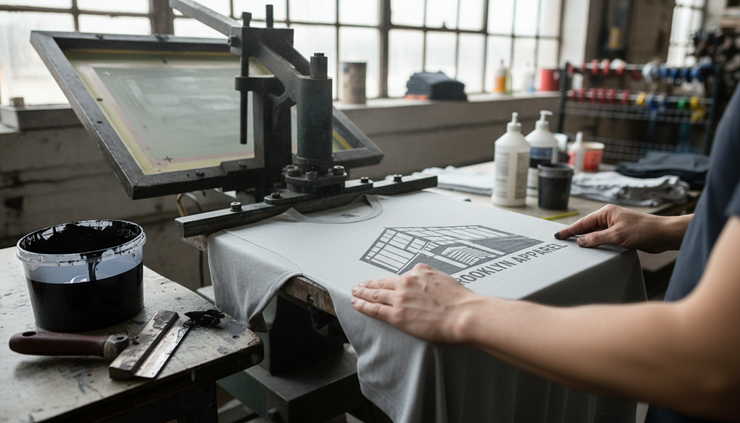
Build the production plan around quantity and timing
Once the sample is approved, production becomes about consistency.
A finished collection may include multiple garment styles, sizes, colors, and print locations. Even a small run can become complex if it includes front prints, back prints, sleeve hits, neck labels, hang tags, folding, and packaging.
A practical production plan should include:
Final quantities by size and color
Guessing size breakdowns can create shortages or overstock. For retail drops, many brands review past sales, audience data, or expected customer fit before placing the run.
Approved garment list
Style numbers, colors, and sizes should be confirmed before ordering blanks. This reduces substitutions and last-minute changes.
Approved artwork and placement
Every print location should have a clear size and position. A front left chest print, full back print, sleeve graphic, and inside neck label all need their own specs.
Production method for each piece
A collection can involve more than one method. For example, tees may be screen printed, hats embroidered, and totes printed with transfers.
Review checkpoints
Proofs, samples, or test prints should be reviewed before the full batch moves forward.
Finishing instructions
Folding, poly bagging, size stickers, hang tags, barcode labels, or special packing should be planned before production ends.
BKNY Printing helps clients organize these moving parts so the collection leaves production clean, consistent, and ready for its next step.
Think beyond the print
A professional apparel collection is judged by more than the graphic.
Small finishing details can change how customers perceive the product. This is especially true for independent clothing brands and artists selling direct to customers, at events, through pop-ups, or online.
Common finishing options include:
Inside neck label printing
Woven or printed labels
Hang tag application
Folding and bagging
Size stickers
Custom packing by style or order group
Sleeve, hem, or leg placements
Specialty placements for limited releases
Finishing does not need to be complicated. A clean fold, clear size sticker, and consistent packing can make a small run feel organized and retail ready. For premium capsules, custom neck labels and hang tags can help the product feel complete.
The key is to plan finishing before production starts. Adding it after the garments are printed may still be possible, but it can slow the job and create extra handling.
Why Brooklyn production still matters
New York has always rewarded speed, taste, and resourcefulness. For apparel, being able to work with a local production team can make a real difference.
A Brooklyn production partner can help with details that are easier to solve when the team understands the pace of NYC work. Designers may be preparing for market week, a release party, a pop-up, a gallery opening, a tour date, or a brand deadline. Agencies may need apparel for an activation. Established brands may need samples quickly before moving into a larger buy.
Local production also helps clients review materials, talk through options, and make better decisions before the order is in motion. That does not mean every job needs an in-person review. Many projects can be handled cleanly through files, specs, and approvals. But access to experienced production support matters when the details count.
BKNY Printing serves clients beyond New York as well, but its roots in Brooklyn shape the way the shop works: practical, direct, detail focused, and respectful of the creative process.

What BKNY Printing brings to the process
A reliable apparel production partner does more than take an order. The right team helps prevent avoidable mistakes, recommends workable options, and respects the standard the finished collection needs to meet.
BKNY Printing supports custom apparel projects with a production-minded approach:
Guidance on blanks, fabric, fit, and garment quality
Help choosing the right decoration method
Artwork review before production
Sampling for designs that need approval
Short-run and small-batch production
Screen printing, digital print options, embroidery, and finishing support
Production planning for collections, merch drops, events, and brand releases
Quality checks before garments leave the shop
That combination is especially useful for creative clients who know what they want the product to feel like, but need help turning that vision into clear production steps.
For a designer, that may mean finding the right heavyweight tee and testing a back print. For a musician, it may mean preparing tour merch that can be packed and sold easily. For an artist, it may mean translating detailed artwork onto fabric without losing the character of the piece. For an agency, it may mean producing a polished short run that arrives on time and looks consistent.
A simple roadmap from idea to finished collection
The path from concept to collection does not need to be confusing. A clean process keeps the work moving.
Define the product
Decide what you are making, who it is for, and how it will be used or sold.
Choose the garment
Select blanks based on fit, fabric, color, quality, and availability.
Prepare the artwork
Provide clean files with correct size, placement, and color direction.
Select the production method
Match the decoration technique to the design, garment, and quantity.
Create and review the sample
Check print quality, placement, color, fit, and finishing details.
Approve the final specs
Confirm quantities, sizes, garment colors, print locations, labels, and packing.
Produce the run
Move into production with clear instructions and approved references.
Finish and prepare for delivery
Fold, tag, bag, organize, and pack the collection according to the project needs.
This is the core of a professional apparel production workflow. It gives creative ideas the structure they need to become real products.
The best collections are built with production in mind
A finished apparel collection should feel intentional from the first touch. The weight of the garment, the scale of the print, the placement of the label, and the way each piece is folded all contribute to the customer’s impression.
For emerging designers and independent brands, good production is not just a final step. It is part of the creative work.
BKNY Printing helps turn early ideas into production-ready apparel through experience, practical guidance, and hands-on execution. Whether the project is a small capsule, an artist release, a merch run, a sample set, or a limited collection, the process works best when design and production speak to each other from the start.
Bring the idea, the artwork, or even the rough concept. The next step is turning it into a garment people can wear, buy, and remember.


Comments